
Water Pipe Surveys in Snodland
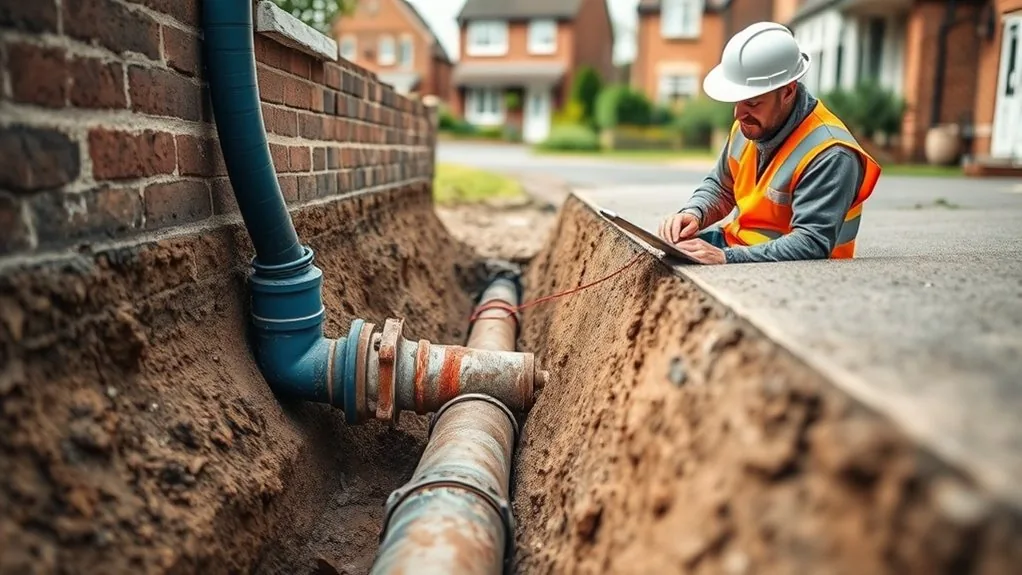
Hidden leaks, corrosion, and faulty fittings in your water pipes can cause serious issues if left unchecked.
Professional surveys using acoustic testing, CCTV, and pressure analysis can accurately identify these problems with minimal disruption.
Call now for a fast quote or emergency callout in Snodland.
Although the term can sound broad, a water pipe survey is a systematic inspection and mapping of your water supply pipes to assess their condition, performance, and compliance with relevant standards. You’re not just checking if water flows; you’re documenting pipe routes, materials, dimensions, and service connections to create an accurate network record.
Technicians typically use acoustic sensors for leak detection, pressure testing, and internal inspection tools to identify pipe corrosion, structural defects, and flow restrictions. Survey data’s logged, geo‑referenced, and analysed against regulatory and manufacturer criteria. You’ll receive a technical report detailing asset condition, hydraulic performance, and any safety or contamination risks. This engineering‑led approach lets you manage your pipe infrastructure proactively, based on measurable evidence rather than assumptions.
Knowing when to commission a water pipe survey is critical for preventing failures rather than reacting to them. You shouldn’t wait for a burst main or visible flooding; subtle indicators often appear long before serious disruption, contamination, or structural damage occurs. A methodical assessment, focused on pipe corrosion and leak detection, lets you intervene early and keep your Snodland supply compliant and reliable.
You typically need a survey when you notice:
You’ll start with an initial site assessment that identifies your network layout, operating conditions, and any immediate safety constraints. From there, technicians apply advanced pipe diagnostics—such as CCTV inspection, acoustic testing, and pressure analysis—to locate defects and quantify risk. The findings are then converted into a clear report with prioritized recommendations and, if required, options for ongoing monitoring to maintain system integrity.
Before any equipment’s set up or pipes are exposed, a structured initial site assessment defines how the water pipe survey in Snodland will proceed safely and efficiently. You’ll walk the site with trained technicians, confirming service locations, isolation points, and access constraints.
They’ll review existing drawings, verify incoming main positions, and identify each pipe material in use, since metallic, plastic, or composite lines respond differently to tracing and leak-detection methods. This information underpins survey accuracy and helps prevent misidentification of critical assets.
Technicians will also check for confined spaces, traffic risks, unstable ground, and nearby utilities, implementing controls such as barriers, permits, and lock‑off procedures. By the end, you’ll have a defined survey plan, risk controls, and agreed working zones.
Once the site assessment’s complete and control measures are in place, advanced pipe diagnostics turn the plan into precise, data‑driven findings. You’ll see technicians deploy calibrated sensors and non‑intrusive instruments to interrogate the network under controlled conditions.
Specialist leak detection equipment listens for acoustic anomalies and pressure fluctuations, pinpointing hidden losses without excavation. Concurrently, inline cameras and electromagnetic tools profile internal pipe walls, measuring scale, pitting, and early‑stage pipe corrosion. Flow and pressure loggers are installed at critical nodes to track performance over time and verify hydraulic integrity.
Throughout, parameters are checked against statutory and best‑practice thresholds, with strict isolation, backflow protection, and hygiene protocols so diagnostics don’t compromise water quality or system safety.
After the diagnostics phase, findings are converted into a structured report that defines the condition of your pipework and the actions required to keep it safe and compliant. You’ll receive a clear schematic of the surveyed network, with each asset tagged and referenced to inspection data.
The report details evidence of pipe corrosion, scaling, biofilm risk, mechanical damage, and any anomalies flagged by leak detection equipment. Defects are prioritised using a risk-based matrix, linking likelihood of failure to potential impact on supply, hygiene, and property.
You’re then given precise recommendations: targeted repairs, lining or replacement, pressure adjustments, and valve or meter upgrades. Each action includes technical justification, compliance references, and indicative timeframes so you can plan remedial works systematically and safely.
Your survey report doesn’t mark the end of the process; it sets the baseline for ongoing monitoring that keeps your Snodland pipe network within safe operating limits. From that point, you’ll use structured data to track condition trends, schedule pipe maintenance, and refine leak detection thresholds before failures occur.
| Monitoring option | Primary purpose | Typical interval |
|---|---|---|
| Flow/pressure logging | Detect anomalies | Continuous / 15 min |
| Acoustic leak detection | Pinpoint small leaks | Quarterly / biannual |
| CCTV spot inspections | Verify internal condition | Annual / risk-based |
| Corrosion potential tests | Assess material loss | Annual |
| Valve exercising checks | Confirm operability | 6–12 months |
You’ll integrate these results with your initial survey model, updating risk scores and intervention priorities so each maintenance action is defensible, documented, and safety-led.
Although traditional excavation has long been the default for finding and repairing underground mains, modern water pipe surveys offer a far more controlled, data‑driven approach that reduces risk, disruption, and cost. Instead of opening long trenches, you deploy targeted inspection tools that pinpoint pipe corrosion, joint failures, and hidden fractures with minimal surface disturbance.
With survey technology, leak detection relies on acoustic, pressure, or tracer‑gas methods that let you localise defects within centimetres before you commit to any digging. You’re not exposing operatives or the public to unnecessary open excavations, plant movement, or service strikes. By confirming pipe condition first, you can design excavation that’s confined, shored correctly, and compliant with CDM and utility‑mapping requirements, markedly improving overall site safety.
Modern water pipe surveys don’t just change how you locate defects; they also change the outcomes you can secure on cost, safety, and asset performance. By using internal cameras, acoustic sensors, and data logging, you’re no longer relying on assumptions or disruptive exploratory digs.
Whether you’re responsible for a single household in Maidstone or a multi‑site industrial estate in Medway, water pipe surveys in Snodland apply the same core techniques but with different objectives, risk profiles, and regulatory drivers. In domestic settings, you’re focused on protecting drinking water quality, preventing property damage, and locating hidden service lines. Leak detection is typically targeted at small, chronic losses that can undermine structures or encourage mould.
In commercial and industrial premises, you’re managing higher flow rates, complex networks, and stricter compliance obligations. Pipe mapping becomes critical for planning upgrades, isolations, and emergency shut‑offs without disrupting operations. Methodical surveying lets you document materials, joint types, and pressure zones, so you can prioritise remedial work and demonstrate a defensible, safety‑led maintenance strategy.
Across both domestic and commercial networks, you need a survey provider that applies the same disciplined methods while tailoring scope, reporting, and access arrangements to each site. Across Snodland, your water pipe surveys are planned, risk-assessed, and executed to minimise disruption, protect hygiene, and preserve structural integrity.
We combine acoustic and correlation-based leak detection, pressure testing, and CCTV inspection to build a precise asset picture that supports long-term pipe maintenance planning. You’ll know where your buried services run, how they’re performing, and which sections demand priority intervention.
| Service Element | What You Gain |
|---|---|
| Network mapping | Accurate as-built route verification |
| Condition assessment | Evidence for targeted pipe maintenance |
| Active leak detection | Early fault identification, reduced risk |
Because buried water assets are critical infrastructure, you need a survey partner that treats every network as a controlled environment, not just a mapping exercise. We apply water-industry standards, calibrated equipment, and documented procedures on every project across Snodland.
You’re guided through a clear methodology: pre-survey risk assessment, asset verification, non-invasive tracing, then targeted validation. Our leak detection technologies are selected to suit pipe material, depth, and operating pressure, minimising disruption and false positives.
Data is delivered in engineering-ready formats, helping you prioritise pipe replacement, pressure management, and rehabilitation planning. Every operative is trained in hygiene, isolation protocols, and confined-space safety, so potable mains remain protected. You get defensible survey outputs that withstand regulatory, insurance, and stakeholder scrutiny.
You’ll understandably want clear answers on how long a water pipe survey takes, whether it’s more cost‑effective than excavation, and if your specific area in Snodland is covered. In this section, we’ll address these points with a focus on survey duration, comparative costs, and operational boundaries. Our responses are based on standard field procedures, risk controls, and regulatory best practice to help you plan works safely and efficiently.
How long a water pipe survey takes depends on several technical factors, including the length and diameter of the pipework, access points, pipe material, and the type of survey method used (e.g., CCTV inspection, acoustic leak detection, or pressure testing). In a typical Snodland property, you’re usually looking at 1–4 hours for most domestic systems, longer for complex commercial networks.
Engineers first isolate sections safely, assess Water quality, and confirm pipe materials to select suitable equipment and pressures. CCTV surveys often take the longest, as the camera is advanced carefully to avoid damaging older mains. Acoustic and correlation tests are faster but still require systematic valve operation and monitoring. Throughout, you’ll be kept informed about timings, shutdown needs, and any safety-related constraints.
In most scenarios, a water pipe survey is considerably cheaper than digging because it limits excavation to only where it’s proven necessary. Instead of opening long trenches, you use targeted diagnostics to pinpoint defects and optimise repair scope.
A survey combines pressure testing, acoustic leak detection, and internal camera inspection to identify pipe corrosion, joint failures, and hidden leaks. That means you’re paying for data-led investigation, not speculative groundworks.
Wondering whether your property’s covered in Snodland is a valid first step before planning any water pipe survey. Our area coverage spans all major towns, rural villages, and new developments across the county, but we’ll always verify your exact postcode before confirming a booking.
To determine service availability, we check three factors: distance from our nearest team base, access for survey vehicles, and known constraints such as restricted highways or private estates. You’ll receive a clear yes/no answer plus any special access requirements.
If you’re near county borders, we’ll assess whether a cross-boundary visit is safe and practical. Where we can’t attend, we’ll advise on alternative accredited specialists rather than risk compromised survey quality or safety.
Yes, water pipe surveys can detect minor leaks before they become serious problems. They use methods such as pressure testing, flow monitoring, and acoustic listening devices to identify small drops in water pressure and locate hidden leaks. CCTV or endoscopic cameras are also used to check for pipe corrosion, joint issues, and material defects.
Yes, survey findings are accepted by insurance companies for water damage claims. A professional survey with time-stamped images, clear leak locations, and repair recommendations is required. It is important to check your policy wording and submit reports in the format requested by the insurer or loss adjuster for best results.
Water pipes in older Snodland properties should be surveyed every 5 years. If there is a known risk of corrosion, lead pipework, or previous leaks, surveys should be carried out every 2 to 3 years. Inspections should include CCTV or acoustic surveys and visual checks of joints and pipe insulation, with priority given to buried and hard-to-access sections. Additional surveys are recommended after severe cold weather or ground movement. All findings, repairs, and upgrades to insulation and materials must be documented to ensure safety and compliance.
Yes, you will receive both video footage and digital reports from the water pipe survey. Technicians use CCTV equipment to record the internal condition of the pipes and provide video files alongside a detailed report. These documents include information on pipe locations, materials, defects, root ingress, and possible leaks, which you can keep for compliance and maintenance purposes.
Yes, surveys can identify illegal connections and incorrect layouts in the water supply network. They use CCTV, tracing, and pressure testing to check if all branches, bypasses, and joints match the network design. Engineers compare survey results with utility records to detect unauthorised connections and verify that installations meet required standards.
Once you’ve identified a potential issue or need to confirm the condition of your supply line, requesting a quote for a water pipe survey in Snodland should be a structured, data-led step, not a guess. You’ll get a faster, more accurate estimate if you provide pipe material, approximate pipe length, depth, age, and any visible symptoms such as pressure loss, discolouration, or localised damp.
Specify your water usage profile, known connection points, and preferred survey frequency so the scope reflects operational and compliance risks, not just cost.
Ask for a breakdown of methods proposed (acoustic, tracer gas, CCTV, correlation), traffic or access management requirements, and reporting format. Confirm the quote includes clear safety controls, isolation procedures, and any reinstatement or follow‑up testing allowances.